
Airbnb Interior Design: Ultimate Guide
Airbnb interior design has two jobs. It needs to help a listing earn attention in photographs, and it needs to make the stay comfortable once guests arrive. A room that looks memorable but functions poorly can create complaints. A practical room with no visual identity can disappear among comparable listings.
The right plan balances guest fit, durability, operations, and budget. This guide explains how to make those decisions room by room, estimate the furnishing scope, and decide whether to manage the project yourself or hire professional help.
Start With the Guest and the Market
Do not choose a design style in isolation. Begin with the people most likely to book the property and the reasons they visit the market. A family destination may need durable dining seats, flexible sleeping arrangements, and storage for outdoor equipment. A couples retreat can devote more space to privacy, atmosphere, and a comfortable primary bedroom. A property serving remote workers needs reliable task lighting, accessible outlets, and a real work surface.
Review comparable listings at several price points. Look beyond color palettes and record how the strongest properties handle:
- Luggage, coats, shoes, and outdoor equipment.
- Group seating, dining capacity, and circulation.
- Bedside lighting, outlets, work surfaces, and privacy.
- An important guest need that nearby competitors handle poorly.
The goal is not to copy another listing. It is to identify local expectations and make the stay easier for your target guest.
Let the building participate in the design. Views, architecture, climate, and neighborhood can guide materials and character. A coastal rental may benefit from washable textiles and corrosion-resistant finishes. A mountain cabin may support warmer materials and layered lighting. The connection should feel specific without becoming a theme park.
Build the Plan Around Real Guest Use
A useful layout starts with circulation. Guests should be able to enter with bags, reach bedrooms without moving furniture, open drawers and doors fully, and move through shared rooms without squeezing between pieces. Measure walls, door swings, windows, outlets, and paths before selecting furniture.
Plan capacity consistently. If a property advertises space for eight guests, the dining area, living room, and outdoor gathering space should support that group as closely as the floor plan allows. Adding sleeping capacity without adding places to eat, sit, and store belongings creates friction that photographs may not reveal.
Prioritize the rooms that shape the stay
- Living room: Provide enough comfortable seating, a clear conversation layout, durable tables, and lighting for both social time and quiet evenings.
- Bedrooms: Start with a supportive mattress, washable layers, bedside lighting, accessible outlets, luggage space, and window coverings that provide privacy.
- Dining area: Match seating to realistic occupancy and leave enough clearance to pull out chairs without blocking circulation.
- Kitchen: Organize frequently used tools where guests can find them. Durable, replaceable basics are more useful than a large collection of specialty items.
- Entry: Make room for shoes, coats, keys, and instructions. In recreational markets, account for skis, beach gear, or wet clothing.
- Outdoor space: Choose weather-appropriate furniture and confirm that lighting, railings, rugs, and fire features are safe for guest use.
Choose a Durable Design System
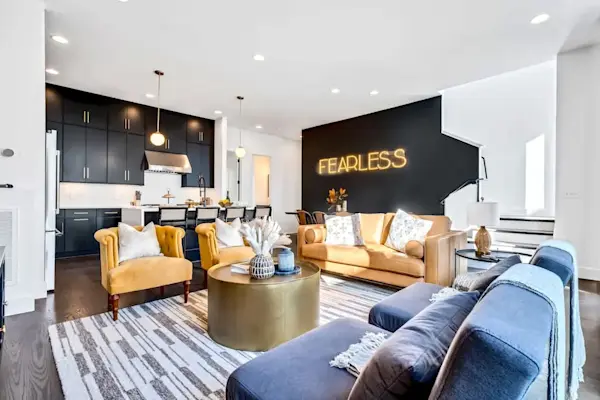
A design system keeps the property coherent and makes future replacements easier. Define a restrained palette, two or three recurring materials, a lighting approach, and a consistent level of formality. Repeat those choices throughout the home while allowing one or two memorable moments in the rooms most likely to appear in listing photographs.
Hospitality durability is different from residential perfection. Before specifying an item, check whether it has:
- Commercial-grade upholstery or a performance fabric.
- Washable or replaceable covers and shades.
- Sealed surfaces that tolerate appropriate cleaning products.
- Parts or a matching replacement that can be reordered.
A damaged item should be cleanable, repairable, or replaceable without forcing a room redesign.
Avoid spending heavily on objects guests cannot use or appreciate. Art, color, and styling can establish character, but comfort and maintenance should control the specification. Secure tall furniture, use stable tables, protect sharp corners where children are expected, and keep exits and walkways clear. Verify current safety requirements for the property with the appropriate local professionals.
Create impact without creating clutter
Listing photographs need a focal point, not a room full of competing statements. A distinctive headboard, large artwork, painted wall, or well-composed seating area can provide visual identity. Leave negative space around that moment so the room reads clearly in both wide photographs and in person.
Local work can add character when it is relevant and replaceable. A regional map, commissioned print, or material connected to the area usually feels more considered than generic destination signs. Avoid personal photographs, fragile objects, and decorative pieces that occupy useful surfaces.
Set a Furnishing Budget Before Shopping
There is no reliable universal price for furnishing an Airbnb. Total cost depends on square footage, room count, existing inventory, product quality, freight, delivery access, installation, and the amount of styling required. A budget should therefore be assembled from the property scope rather than from a single industry average.
Build a room-by-room schedule before purchasing. For every required item, record:
- Target dimensions and quantity.
- Product allowance and current quoted price.
- Delivery lead time and an acceptable alternate.
- Freight, assembly, and installation costs.
- Replacement priority.
Add separate allowances for window treatments, linens, kitchenware, artwork, taxes, and contingency. This prevents a low furniture subtotal from disguising the actual installed cost.
Fund sleep, seating, dining, lighting, and safety first. If the budget tightens, simplify decorative layers before reducing mattress quality or buying seating that is too small for the advertised group. The vacation rental furnishing estimator can provide an initial planning range, which should then be reconciled with measurements and current vendor quotes.
Account for time as well as price
Availability can change between specification and checkout. Before ordering, confirm lead times and prepare acceptable alternates for critical pieces. Consolidating purchases may reduce coordination, but it can also concentrate delay risk. Track every order through delivery, inspect damage promptly, and keep a final installation list so missing hardware or small essentials do not delay photography.
Design for Photography and the In-Person Stay
Guests usually encounter the home first as a sequence of listing images. Arrange each primary room around a clear view that communicates scale, function, and character. Use layered lighting, control mixed color temperatures, remove visual clutter, and make beds and textiles camera-ready before the photography session.
Photography cannot compensate for a confusing layout. Wide-angle images may make a room appear larger, but guests will notice blocked paths, undersized furniture, or missing task lighting immediately. Review the finished home at walking height, seated height, and after dark. Then photograph what the guest will actually receive.
After launch, treat reviews and maintenance records as design feedback. Repeated comments about darkness, uncomfortable seating, missing storage, or confusing equipment identify changes that may matter more than a new decorative trend. Keep a replacement schedule for linens, cookware, upholstery, and frequently handled items.
DIY, Design-Only, or Turnkey Service?
A hands-on owner can manage a smaller project when the scope is clear, measurements are reliable, and someone can receive, assemble, inspect, and install orders. DIY provides direct control, but the owner also absorbs sourcing time, vendor coordination, substitutions, damage claims, and installation risk.
Design-only support can be useful when the owner has dependable local labor and procurement capacity but needs help with layout, style, and specifications. Confirm whether the deliverable includes measured plans, clickable product schedules, alternates, revision rounds, and installation guidance.
A turnkey team can coordinate design, purchasing, delivery, installation, and styling under one scope. Compare providers on hospitality experience, fee structure, procurement transparency, geographic coverage, lead-time assumptions, damage handling, and the exact condition in which the property will be handed back. Ask to see complete projects similar in size and market, not only isolated room photographs.
When comparing Airbnb interior design services or packages, ask each provider to define:
- The rooms, measurements, plans, and revision rounds included.
- Whether fees, product markups, freight, storage, and installation are itemized.
- Who manages substitutions, damage claims, and delivery delays.
- What the owner or local team must supply.
- The condition in which the property will be handed back.
A Practical Final Review
Before photography and launch, walk through the property as a guest would. Confirm that:
- Every advertised sleeper has appropriate bedding, lighting, an outlet, and luggage space.
- Dining and shared spaces support realistic occupancy.
- Drawers, doors, windows, and paths open without obstruction.
- Every lamp, outlet, appliance, and safety device works.
- Instructions are available for unfamiliar equipment.
- The finished rooms match what the listing will promise.
The strongest Airbnb interiors are not simply attractive. They are easy to understand, comfortable to use, resilient under frequent turnover, and distinctive enough to be remembered. Start with the market and guest, protect the operating budget, and use design to connect the listing promise with the stay guests actually experience.